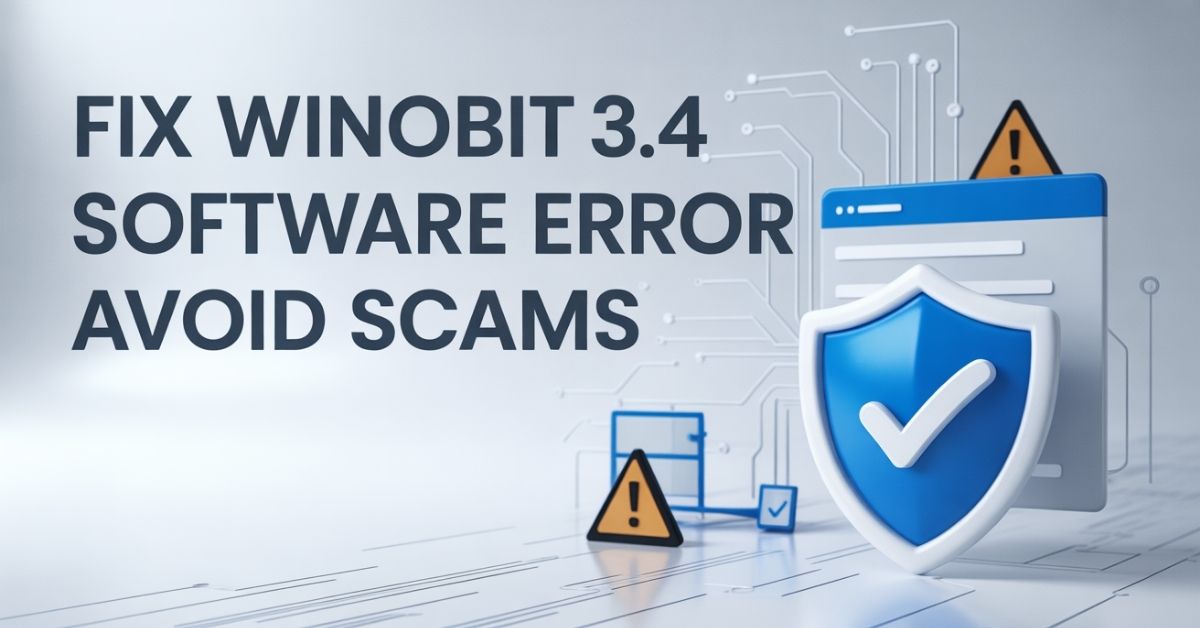
Facing a sudden “winobit3.4 software error” can be alarming. Your screen might freeze, a program you trust could crash, or worse—a threatening pop-up might claim your computer is infected. The critical first step is knowing what you’re up against. This guide will help you diagnose the real problem and provide a clear path forward, whether you’re fixing a legitimate software glitch or escaping a sophisticated tech support scam.
Identify Your Error: Real Problem vs. Tech Support Scam
Before you try any fixes, it’s crucial to determine which type of “winobit3.4 software error” you’re experiencing. The solution for a genuine software crash is completely different from the response needed for a fraudulent pop-up.
Signs of a Legitimate Software Error
You are likely dealing with a real software malfunction if the error occurs under these specific conditions:
- Context: The error appears when you intentionally launch or use a system utility tool named Winobit (version 3.4) that you previously installed.
- Behavior: The program fails to start, freezes, or closes unexpectedly, often accompanied by a standard Windows error dialog box.
- Control: You can usually close the error and continue using your computer, and the problem is repeatable when you try to open the Winobit application.
Red Flags of a Fake Scam Pop-up
Conversely, you are almost certainly seeing a tech support scam if you notice these warning signs:
- Context: A sudden, unsolicited pop-up or browser tab appears while you are simply browsing the internet. You did not attempt to open any Winobit software.
- Behavior: The alert is designed to panic you. It uses loud sounds, flashing red colors, and official-looking logos (like a Windows shield) to display fake virus scan results and dire warnings (e.g., “Critical System Error!”).
- Demand: It urges immediate action, instructing you to call a toll-free number to speak with “Microsoft Certified Support.” The pop-up may hijack your browser, making it difficult to close.
Immediate Action: If your experience matches the scam indicators, do not call the number. The next section of this guide is dedicated to helping you safely close the pop-up and secure your system.
Fix the Real Winobit3.4 Software Error
If you’ve confirmed this is a genuine software issue with a program you installed, follow these troubleshooting steps in order.
Basic Fixes to Try First
Start with these simple solutions that resolve common glitches.
- Restart Your Computer: A reboot clears temporary system memory and stops conflicting processes.
- Run as Administrator: Right-click the Winobit shortcut and select “Run as administrator.” This grants the necessary system permissions.
- Check for Updates: Ensure you have the latest version of the software from the official provider.
Advanced Troubleshooting Steps
If the basics don’t work, the problem may be deeper.
- Perform a Clean Reinstall:
- Uninstall Winobit3.4 via Settings > Apps > Installed apps.
- Restart your PC.
- Download the latest installer from the official source and reinstall.
- Repair System Files: Corrupted Windows files can cause software crashes.
- Open Command Prompt as Administrator.
- Type sfc /scannow and press Enter. This System File Checker will scan and repair Windows system files.
- Update System Dependencies: The software may require updated Microsoft runtimes.
- Visit the official Microsoft website to download and install the latest Microsoft Visual C++ Redistributables.
Quick-Reference Solution Table
Match your symptom to the fastest fix.
| Symptom | Likely Cause | Recommended First Fix |
| Crashes immediately on startup | Missing permissions | Run as Administrator |
| Program is slow or unresponsive | Software conflict | Restart PC & close other programs |
| Error after a Windows update | Broken compatibility | Update software or use Compatibility Mode |
| “DLL is missing” error | Corrupted system file | Run sfc /scannow in Command Prompt |
Recover From and Prevent Winobit Scams
The fake “winobit3.4” error pop-up is a common social engineering tactic. Here’s how to respond.
What to Do If You See the Fake Alert
- Do Not Panic or Call: Your system is not infected by what the pop-up shows. It is a fiction.
- Close Your Browser: Use Ctrl+Shift+Esc to open Task Manager, select your browser (Chrome, Firefox, Edge), and click “End Task.”
- Clear Browser Data: After restarting your browser, clear your cache and browsing data to remove any malicious scripts.
- Run a Security Scan: Use Windows Security (Windows Defender) or a trusted antivirus like Malwarebytes to perform a full scan for peace of mind.
Critical Steps If You Paid or Gave Access
If you already engaged with the scammers and provided payment or remote access, act immediately:
- Disconnect from the Internet: Turn off Wi-Fi or unplug the Ethernet cable to sever the scammer’s remote access.
- Scan for Malware: Run an offline or full-system antivirus scan.
- Change All Passwords: Start with email and financial accounts, using a different, clean device (like your smartphone).
- Contact Financial Institutions: Call your bank or credit card company to report fraud and dispute charges.
- Report the Scam: File a report with the Federal Trade Commission (FTC) at reportfraud.ftc.gov.
How to Protect Yourself from Future Scams
- Keep Software Updated: Enable automatic updates for your operating system and browser to patch security vulnerabilities.
- Use a Reputable Ad-Blocker: Browser extensions like uBlock Origin can block many malicious pop-ups.
- Never Grant Unsolicited Remote Access: Legitimate companies like Microsoft will never call you out of the blue to fix your computer.
- Trust Your Instincts: If an alert seems designed to panic you, it is likely a scam.
Conclusion
Resolving a “winobit3.4 software error” hinges on correct diagnosis. For a legitimate software crash, methodical troubleshooting—from clean reinstalls to system file repairs—will usually resolve the issue. For the more common scam pop-up, the best fix is vigilance and knowing the immediate steps to close the threat and protect your data. By understanding both scenarios, you can confidently secure your system, whether you’re fixing a bug or outsmarting a fraudster.
FAQ’s Section
1. Is Winobit3.4 a legitimate software program?
Winobit appears to be referenced primarily in the context of tech support scams. There is no widely recognized, legitimate system utility by that name from a major software developer. Errors related to it are almost exclusively associated with fraudulent pop-ups.
2. I called the number in the pop-up but hung up. What should I do?
If you called but did not grant remote access or make a payment, your risk is lower. Simply follow the scam recovery steps above: run a full antivirus scan and change important passwords as a precaution. The scammers now have your phone number, so be wary of future scam calls.
3. Can these fake pop-ups actually infect my computer with a virus?
The pop-up itself is usually just a webpage designed to trick you. However, clicking on links or buttons within the pop-up can sometimes lead to downloading actual malware. This is why it’s critical to close the browser without interacting with the alert and then run a security scan.
4. What are the most common LSI keywords related to this issue?
When searching for this problem, users often also use terms like: “winobit3.4 virus removal,” “tech support scam pop-up,” “how to remove fake system alert,” “Windows error scam,” and “browser hijacker pop-up.” These all point to the same fraudulent activity.
Continue your learning journey. Explore more helpful tech guides and productivity tips on my site Techynators.com.

Hi, I’m James Anderson, a tech writer with 5 years of experience in technology content. I’m passionate about sharing insightful stories about groundbreaking innovations, tech trends, and remarkable advancements. Through Techynators.com, I bring you in-depth, well-researched, and engaging articles that keep you both informed and excited about the evolving world of technology. Let’s explore the future of tech together!